Updated: June 28, 2026
My Quick Answer
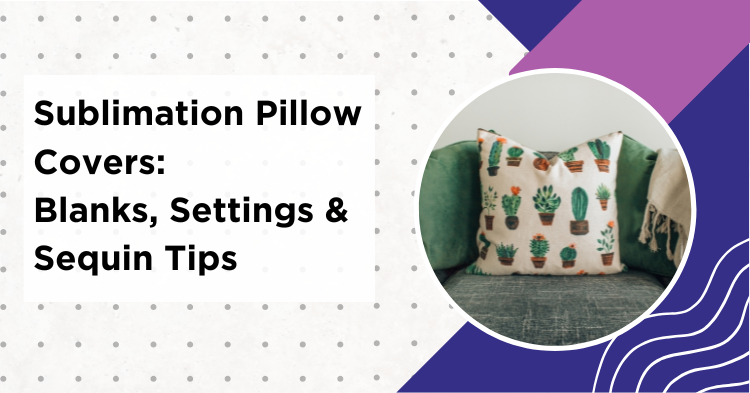
Yes, you can sublimate on pillow covers as long as the fabric is polyester or a high polyester blend in white or a light color. Sublimation pillow covers come in several types, classic polyester, linen-look, cotton-feel, and reversible sequin, and each one creates a different look. Settings typically start around 385-400°F for 45-60 seconds, but vary by blank type. A pressing pad inside the cover is important to avoid seam marks.
Last Updated: June 2026
Sublimation on pillow covers is one of the easiest and most versatile sublimation projects you can do. A custom pillow with a pet photo, a child’s drawing, a family picture, or a seasonal design makes a thoughtful personalized gift or a great addition to your home decor. Pillows work well for selling on Etsy and at craft fairs because the blank cost is modest while personalized designs often support higher pricing.
What makes pillow covers especially beginner-friendly is that they press on a standard flat heat press, no mug press, tumbler press, or oven needed. If you can press a shirt, you can press a pillow cover. The main thing you need to know is which type of pillow cover to buy and how to avoid the most common mistakes (seam marks, bleeding, and fading).
This guide covers everything about sublimation on pillow covers: the different types compared, step-by-step instructions, settings for each type, design ideas that sell, and how to fix common problems.
Types of Sublimation Pillow Covers Compared
Not all sublimation pillow covers are the same. The type you choose affects how the finished product looks and feels. Here is a comparison of the most common options:
| Type | Feel | Color Result | Best For |
|---|---|---|---|
| 100% Polyester (classic) | Smooth, slightly silky | Brightest, most vibrant | Photo pillows, bold designs |
| Linen-look polyester | Thick, textured, premium | Slightly muted, warm tone on cream base | Farmhouse decor, gifts, premium look |
| Cotton-feel polyester | Soft, feels like cotton | Good color, not shiny | People who dislike the silky polyester feel |
| Canvas-style polyester | Thick, textured, canvas weave | Slightly muted, textured look | Artistic prints, rustic decor |
| Reversible sequin (mermaid) | Sequins on front, fabric on back | Design reveals when sequins are swiped | Fun gifts, kids, viral social media appeal |
All of these need to be sublimation-ready blanks, dedicated sublimation blanks are the safest choice (though light-colored polyester pillow covers with high enough polyester content can also work in a pinch). The standard size is 16×16 inches, though other sizes are available. Most have either a zipper or envelope closure on the back.
My tip: if you are making pillows to sell or give as premium gifts, the linen-look polyester covers feel much more expensive than they actually are. The slightly textured, cream-toned finish looks more like home decor than craft project. For the brightest photo prints, stick with white 100% polyester.
Best Pillow Cover Blank by Use Case
Which type should you buy? It depends on what you are making:
| Use Case | Best Blank Type | Why |
|---|---|---|
| Photo pillows (pet, family, portrait) | 100% white polyester | Brightest colors, sharpest photo detail |
| Farmhouse decor, premium gifts | Linen-look polyester | Textured, premium feel, warm cream tone |
| Customers who dislike silky polyester | Cotton-feel polyester | Softer hand feel, non-shiny finish |
| Fun gifts, kids, social media content | Reversible sequin | “Reveal” effect when sequins are swiped |
| Artistic prints, rustic or boho decor | Canvas-style polyester | Thick canvas weave gives art-print feel |
| Beginners (first pillow project) | 100% white polyester | Most forgiving, brightest results, cheapest blanks |
Safe Print Area by Pillow Size
Do not design all the way to the edge of the pillow cover. The seam allowance around the edges creates uneven pressure and can cause incomplete transfer near the borders. Leave at least half an inch to one inch of margin on all sides.
| Pillow Cover Size | Safe Design Area |
|---|---|
| 12 x 12 inches | ~10.5 x 10.5 inches |
| 16 x 16 inches (most common) | ~14.5 x 14.5 inches |
| 18 x 18 inches | ~16.5 x 16.5 inches |
| Lumbar (12 x 20 inches) | ~10.5 x 18.5 inches |
My tip: always measure the actual flat printable area of your specific blank. Some brands have wider seam allowances than others. When in doubt, go smaller rather than larger on your first test.
How to Sublimate a Pillow Cover (Step by Step)
The process is similar to sublimating a shirt, with one important extra step: you need a pressing pad inside the cover to prevent seam marks. Industry guidance from sublimation trade publications stresses the same point: even pressure over the seams is what separates a clean pillow from one with lines through the design.
Step 1: Prepare your design. Size your design to fit the pillow cover, leaving about half an inch from the edges. For a 16×16 inch cover, about 14.5×14.5 inches is a safe starting size. Mirror your design before printing on sublimation paper. Use at least 300 DPI for sharp results, especially for photos.
Step 2: Prepare the pillow cover. Place a pressing pad, folded towel, or piece of cardboard inside the cover. This raises the printing surface above the seams so the entire design gets even heat and pressure. Without a pressing pad, the seams will leave visible lines through your design.
The Correct Pressing Stack
From top to bottom, your pressing stack should look like this:
1. Top protective paper (butcher paper)
2. Sublimation transfer (face-down on fabric)
3. Pillow cover (printing side up)
4. White cardstock or butcher paper inside the cover (catches bleed-through)
5. Pressing pad or folded towel inside the cover (raises surface above seams)
6. Bottom platen of your heat press
This stack prevents seam marks, protects your press from ink, and catches any bleed-through. Skipping any layer is how most pillow problems happen.
Step 3: Pre-press. Cover the pillow with a sheet of butcher paper and pre-press for about 10 seconds. This removes moisture and wrinkles that can cause blurring or color shifts during the final press. Let it cool for a moment before placing your design.
Step 4: Position and secure your design. Lint roll the surface to remove any dust or fibers. Place your sublimation print face-down on the pillow cover. Secure the corners with heat-resistant tape to prevent the paper from shifting during pressing. Some crafters use repositionable spray adhesive instead of tape for extra security.
Step 5: Press. Close the press and apply heat at the temperature and time for your specific blank type (see settings table below). Use medium pressure, firm enough for good contact, but not so heavy that you crush the pressing pad inside.
Step 6: Cool and peel. Open the press, remove the butcher paper, and peel the sublimation paper according to your blank maker’s instructions (some are warm peel, some hot peel). Inspect the print for even color and coverage. Your pillow cover is ready to stuff with a pillow insert, no curing time needed.
Sublimation Pillow Cover Settings
These are starting settings, always check your specific blank maker’s instructions first. Settings can vary by blank brand, fabric thickness, and press calibration.
| Pillow Type | Temperature | Time | Pressure | Notes |
|---|---|---|---|---|
| 100% Polyester | 385-400°F | 45-60 sec | Medium | Brightest colors; peel warm |
| Linen-look polyester | 385°F | 45 sec | Light | Start at 385°F / 45 sec / light pressure; increase only if needed. Textured blanks can scorch. Colors muted on cream base. |
| Cotton-feel polyester | 385-400°F | 50-60 sec | Medium | Non-shiny finish |
| Canvas-style polyester | 360-385°F | 45 sec | Light | Range varies by brand; always follow the blank maker’s sheet. Peel hot. Use a pressing pillow to prevent crease lines from the thicker weave. |
| Reversible sequin | 380-400°F | 50-60 sec | Medium | Sequin blanks vary more than regular covers; many start at 400°F / 60 sec with medium to firm pressure. Always check your brand’s instructions. |
For the full settings guide across all sublimation substrates, check the sublimation temperature chart.
How to Sublimate on Sequin Pillows (Complete Mini-Guide)
Reversible sequin pillows (sometimes called mermaid pillows) are a unique sublimation product that deserves its own walkthrough. The concept is simple: each sequin has two sides, one colored or silver and one white. You sublimate onto the white side. When the sequins are in their default position, the pillow looks completely normal. When someone swipes the sequins to reveal the white side, your custom design appears underneath.
This “reveal” effect is what makes sequin pillows so popular for gifts, kids’ rooms, and social media content. It is also why they require a different approach than standard pillow covers.
How Sequin Sublimation Works
Unlike regular pillow covers where you press directly onto flat fabric, sequin pillows have a textured surface made of rows of small plastic discs (the sequins) attached to a backing fabric. Each sequin flips between two sides. You only sublimate the white side of the sequins, not the backing fabric underneath. When the sequins are swiped back to their colored side, the design is hidden. When swiped to white, it appears.
This means your design is not on a continuous surface. There are small gaps between sequins, which is why fine details and thin text do not work well on these blanks. Think of it like a mosaic: the overall image reads well from a normal viewing distance, but up close you can see the individual pieces.
Step-by-Step Sequin Pressing
Step 1: Lay the pillow flat and swipe all the sequins in one direction so the white side of the reversible sequins faces up. Make sure every sequin is flipped. Even one row of sequins facing the wrong way will leave a visible gap in your design.
Step 2: Print your design mirrored and place it face-down on the white side of the reversible sequins. If possible, anchor the transfer paper to the protective backing or butcher paper rather than taping directly onto the sequins, since tape can damage or lift individual sequins. If you do tape onto the sequin surface, press each piece firmly and use more tape than you normally would on flat fabric.
Step 3: Cover the entire surface with a Teflon sheet. This protects the sequins from direct contact with the heat press platen. Without a Teflon sheet, the sequins can warp, melt, or stick to the platen.
Step 4: Press according to your blank’s instructions. Many sequin pillow blanks start at 400°F for 60 seconds with medium to firm pressure, but this varies by brand. If your blank does not include instructions, start at 385°F for 50 seconds and adjust from there.
Step 5: Let the pillow cool completely before touching or swiping the sequins, at least 2-3 minutes. If you swipe while the fabric is still hot, you risk smudging the fresh transfer. The reveal is more dramatic when you wait anyway.
What Works (and What Does Not) on Sequin Pillows
Works well: Large faces (pet portraits, baby photos), big bold text, high-contrast graphics, simple logos, and meme-style images. These read clearly even with the gaps between sequins.
Does not work well: Small text, thin lines, intricate patterns, watercolor-style designs, or anything with subtle gradients. The sequin gaps break up fine details, and the design becomes unreadable when swiped.
Color note: Colors on sequin pillows tend to look slightly less vibrant than on flat polyester because the sequin surface is not as smooth. Bold, saturated colors with strong contrast work better than pastels or muted tones.
Common Sequin Pillow Mistakes
Not all sequins flipped. If even a small section of sequins is facing the wrong way during pressing, that area will not receive any ink. Check the entire surface before placing your transfer and make sure every sequin shows its white side.
Paper shifted during pressing. Because the sequin surface is uneven, tape holds less securely than on flat fabric. Ghosting on a sequin pillow is especially visible because the “shadow” image appears every time someone swipes the sequins. Use extra tape, and consider repositionable spray adhesive for additional hold.
Zipper under the platen. Position the cover so the zipper hangs off the edge of the heat press. Heat can melt or warp plastic zippers, and a zipper under the platen creates uneven pressure that affects the transfer.
Swiped too early. The temptation to see the result immediately is strong, but swiping hot sequins can smear the transfer. Always wait until the pillow is completely cool to the touch.
What the finished result looks like: With sequins on their default side (colored or silver), the pillow looks like any normal sequin pillow. When someone runs their hand across the sequins to flip them to the white side, your sublimated design appears. The transition from plain to custom is the entire selling point, and it is why these pillows get such strong reactions as gifts.
Best Sublimation Pillow Design Ideas
Pillows have a large print area (around 14.5×14.5 inches on a standard 16×16 cover), which gives you space for designs that would not work on smaller blanks like mugs or keychains. Here are the design ideas that sell well and make meaningful gifts:
Pet photo pillows. Pet pillows are consistently popular in the custom pillow space. A high-resolution photo of someone’s dog, cat, or pet on a pillow is deeply personal and impossible to find in a store. Pet owners are loyal repeat buyers and often order multiples (one per pet).
Family photo collage. A collage of family photos arranged on a pillow makes a strong gift for parents and grandparents. This works especially well on white 100% polyester covers where photo colors are most vibrant.
Kid’s drawing on a pillow. Scanning a child’s artwork and enlarging it onto a pillow creates a keepsake that families treasure. The large canvas makes even simple drawings look like real art. This is a popular seller for grandparent gifts.
Memorial pillows. Pillows with a photo of a loved one who has passed, person or pet, along with dates and a short message are deeply emotional products. The sentimental value often supports higher pricing than standard decor items.
Baby birth stats. A pillow with a newborn’s name, birth date, weight, length, and time of birth makes a popular nursery decoration and baby shower gift.
Seasonal and holiday pillows. Swappable seasonal pillow covers (spring florals, fall leaves, Christmas designs) are a growing home decor category. Customers buy sets that they rotate throughout the year.
Sequin “reveal” pillows. A photo or funny message hidden under the sequins that appears when swiped. These are popular as gag gifts, birthday surprises, or viral social media content. A pet face reveal or a funny family photo gets strong reactions.
Common Pillow Sublimation Problems and Fixes
Seam marks or lines through the design. This is the most common pillow problem. It happens when you press without a pad inside the cover, so the seams press into the fabric and block the transfer in those spots. Always use a pressing pad, folded towel, or cardboard insert inside the cover. The printing surface needs to be raised above the seams for even contact.
Ink bleeding through to the back. Sublimation ink can pass through the fabric and stain the back side of the pillow cover or the pad inside. Place a sheet of butcher paper between the printing surface and the pressing pad to catch any bleed-through. Also protect your heat press platens with butcher paper.
Faded or dull colors. If your colors look washed out, check three things: is the cover at least 65% polyester (100% is best for vibrant colors), is the temperature high enough, and did you pre-press to remove moisture? Moisture is a common cause of dull transfers on fabric because steam displaces the ink during pressing. For more color troubleshooting, see the sublimation color problems guide.
Ghosting (shadow or double image). The sublimation paper shifted during pressing. Use heat-resistant tape on all four corners, or use repositionable spray adhesive to hold the paper firmly against the fabric. Do not lift or adjust the paper once heat has been applied. For more on ghosting, see the sublimation ghosting guide.
Uneven transfer near edges and seams. Even with a pressing pad inside, the area near the seam allowance can transfer unevenly because the fabric is thicker there. This is normal. Design your image to stay within the safe print area (see size chart above) so the critical parts of your design are not near the edges. If you are doing full-bleed designs, accept that the last half inch near the seams may not be perfect.
Zipper melting or warping. Plastic zippers can deform under heat press temperatures. Position the cover so the zipper is outside the press area, or open the zipper and fold it away from the heat. Metal zippers are more heat-resistant but can still leave marks if pressed against the fabric.
My tip: always do your first press on a blank you are willing to waste. Every brand of pillow cover behaves slightly differently, and the cost of one test blank is much less than the cost of ruining a customer order.
Selling Sublimation Pillow Covers
Pillow covers are a good fit for a sublimation business because the blank cost is modest and personalized designs (pet portraits, memorial pillows, photo collages) tend to support higher pricing than generic decor. Ship just the cover without the insert in a poly mailer to keep shipping costs low, and include a note recommending a standard 16×16 inch pillow insert.
Some sellers focus on custom orders only (pet portraits, memorial pillows), while others stock pre-made seasonal designs for faster sales at craft fairs. Both approaches work. Sequin pillows are especially easy to market on social media because the “reveal” swipe naturally makes a fun short video.
How This Guide Was Made
This guide is based on manufacturer blank specifications, pressing guidance from Heat Press Nation, Cricut, and major sublimation blank suppliers, combined with widely reported crafter experience across multiple pillow cover types. Settings and safe-area recommendations reflect published product guidance and community-tested results. Last verified: June 2026.
Frequently Asked Questions
Can you sublimate on any pillow cover?
No. The pillow cover must be made of polyester or a high polyester blend (at least 65%, though 100% gives the best results) in white or a light color. Standard sublimation has no white ink, so dark covers will not work. Regular cotton pillow covers will not work. Dedicated sublimation blanks are the safest choice, though light-colored polyester pillowcases with at least 65% polyester content can also work.
What temperature and time for sublimation pillow covers?
A common starting point is 385-400°F for 45-60 seconds at medium pressure on a flat heat press. Settings vary by blank type and brand, so always check your specific cover’s instructions first. Linen-look and cotton-feel covers may need slightly longer press times than standard polyester. For sequin pillows, cover the sequins with a Teflon sheet before pressing.
Why do I have lines on my sublimation pillow?
Lines or marks on your sublimation pillow are almost always caused by the seams pressing into the fabric during heat transfer. Place a pressing pad, folded towel, or piece of cardboard inside the cover before pressing. This raises the printing surface above the seams so the entire design gets even heat and pressure.
Can you sublimate on both sides of a pillow cover?
Yes, you can sublimate on both sides of most pillow covers. Press one side first, let it cool, then flip the cover over and press the second side. Use butcher paper inside the cover to prevent the first design from being affected by the heat of the second press. Keep in mind that the back design may be slightly less vibrant due to residual heat exposure.
How do you sublimate on sequin pillows?
Swipe all the sequins so the white side faces up. Print your design mirrored, place it face-down on the white side, cover with a Teflon sheet to protect the sequins, and press at 380-400°F for about 50-60 seconds. Let it cool completely before swiping the sequins. Use bold, high-contrast designs, small details can get lost between the sequins.
Do sublimation pillow covers fade after washing?
Sublimation prints are generally durable because the dye bonds into the polyester fibers rather than sitting on the surface. However, longevity depends on the blank quality, care, and wash conditions. Wash pillow covers inside out on a gentle cycle with cold water and avoid bleach. For more on print durability, see our sublimation washing guide.
What size design do I need for a sublimation pillow cover?
For a standard 16×16 inch pillow cover, design your image at about 14.5×14.5 inches to stay inside the seam allowance. True edge-to-edge results depend on the blank and usually require testing, so start with a safe margin on your first press. Always check the exact printable area for your specific blank.
Are sublimation pillow covers profitable to sell?
Yes, pillow covers can be quite profitable. The blank cost is relatively low while personalized pillows, especially pet portraits, memorial pillows, and photo collages, command strong prices because of their sentimental value. Ship the cover without the insert to keep shipping costs low, and recommend customers buy a standard 16×16 inch pillow insert locally.


Emily Johnson is a DIY crafter and the founder of SublimationGuides.com. She started out repairing and sewing clothes for her two sons, then discovered sublimation as a way to personalize her makes. Today she researches and shares honest, tested guides on sublimation settings, troubleshooting, and equipment.