Updated: July 20, 2026
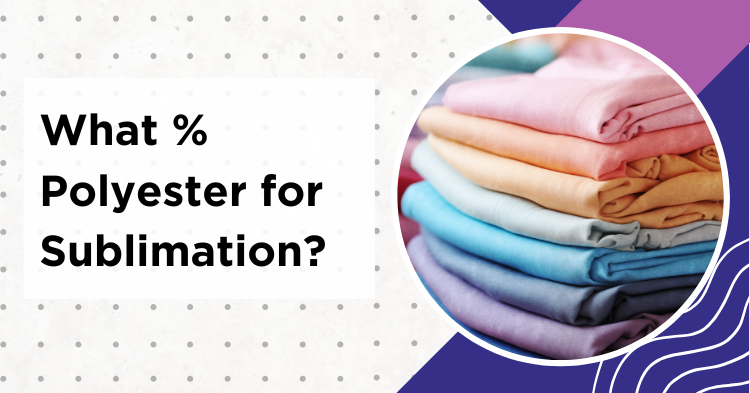
What percent polyester for sublimation is the one question that decides your result before you ever touch the press. The short version: 100% polyester gives you the brightest and most wash-resistant print, around 65% is a common starting point when you want a softer vintage look, and lower-polyester blends come out paler and more heathered. There is no hard technical cutoff, so think in terms of the look you want. This guide breaks down every blend, shows you how to read a shirt tag so you actually know what you are buying, and points out the one labeling trap that catches almost every beginner.
My Quick Answer
For sublimation, aim for 100% polyester when you want bright, sharp, long-lasting prints. 65% polyester is a common starting point for a softer, vintage-style result, but it is not a technical cutoff. Below about 50% polyester the design usually looks paler and more heathered, because disperse dye is only retained by the polyester fibers and the cotton stays largely undyed.
Last Updated: July 2026
What Percent Polyester for Sublimation Do You Actually Need?
Here is the whole decision in one table. Use it as your buying reference before you order blanks, because the fabric you choose sets a ceiling on how good the print can look. No press setting rescues a low-polyester shirt.
| Polyester % | Typical Result | Best For |
|---|---|---|
| 100% polyester | Usually the brightest, sharpest, most wash-resistant | Everyday wear, gifts, items to sell |
| 95% polyester / 5% spandex | Usually very close to 100%, but test (spandex is heat-sensitive) | Athletic and fitted styles |
| 80% polyester / 20% cotton | Often still vibrant, a touch softer | A comfort compromise with good color |
| 65% polyester / 35% cotton | Usually softer and more muted, gentle vintage fade | The trendy faded look, softer hand feel |
| 50% polyester / 50% cotton | Usually noticeably lighter, heathered or distressed | Retro and vintage designs |
| Under 50% polyester | Usually very pale or heathered after washing | Not recommended when vibrant color is required |
These percentages are practical expectations, not fixed performance grades. Two shirts with the same polyester content can produce different results depending on the fabric construction, finish, color, and pressing conditions.
My tip: if you are still learning your settings, buy white 100% polyester and nothing else for your first dozen shirts. It removes one variable so you can judge your time and temperature honestly, without the fabric fighting you.
Why Polyester Percentage Matters So Much
Sublimation works on polyester and almost nothing else, and the reason comes down to what the dye does under heat. Sublimation inks are disperse dyes, a class of colorant made for polyester and related synthetic fibers rather than natural ones. When you press, the solid ink turns to vapor and diffuses into accessible regions of the polyester, where it is retained as the fabric cools and the polymer chains lose their mobility again.
Disperse dyes have little affinity for cotton under normal sublimation conditions, so some dye may sit on the cotton surface at first but is not fixed there with normal wash durability. That is why a print can look perfect coming off the press and then disappoint after laundry day.
So the polyester percentage is really a measure of how much of your shirt can actually hold the design. On 100% polyester, most of the fabric can retain the dye and the color usually reads at full strength. On a 65/35 blend, roughly two thirds of the fabric takes the ink, and your eye blends the dyed polyester with the undyed cotton into a softer, lighter image. Drop to 50/50 and about half the shirt stays largely undyed, which is why those blends look lighter and more heathered. The general trend is gradual: the higher the polyester content, the brighter and more durable the print usually is. The exact result is not fully predictable from the fiber percentage alone.
What Is the Minimum Polyester Percentage for Sublimation?
There is no universal minimum polyester percentage, and no physical threshold at exactly 65%. The transition is gradual. Around 65% polyester is a commonly used starting point when you want a deliberately softer or vintage result, while 80% to 100% is the safer range when you expect stronger color. Even a 65% shirt can look too weak for some bold designs, and a 50% or lower blend can be exactly right when a heathered, vintage look is the goal.
It really comes down to intent. A faded 50/50 print is a disappointment if you wanted vibrant, but it is the whole point if you wanted a retro tee. So the right percentage depends on the look you are after. If you want colors that pop, lean toward 80% to 100%. If you want the heathered vintage aesthetic on purpose, a 50/50 or 65/35 blend is the right tool, and I cover that in detail in the 50/50 polyester cotton sublimation guide.
How to Check the Polyester Percentage on a Blank
This is where most beginners get burned, so it is worth slowing down. The fiber content is printed on the garment tag and on the product listing, usually as two numbers that add up to 100. Always read it before you buy, because “moisture-wicking” or “performance” on the front of a listing does not guarantee high polyester.
The trap to watch for is that the numbers alone do not tell you which fiber is which. The first number belongs to the first fiber named in the listing. So “60/40 cotton/polyester” means 60% cotton and only 40% polyester, while “65/35 polyester/cotton” means 65% polyester and 35% cotton. Never guess the fiber order from the numbers alone, because “60/40” on its own could be either way around. Read the full fiber names, and check the tag when the shirt arrives. If a listing hides the fiber content entirely, that is usually a sign it is low polyester.
Is 100% Polyester Always the Best Choice?
For pure color and durability, usually yes, as long as the garment is actually rated for sublimation temperatures. Not every 100% polyester shirt is. Some can show press marks, shine, or garment-dye migration under heat, so it still pays to test. And “best” depends on what you are making. 100% polyester can feel slick or thin in cheaper shirts, and some customers prefer the softer hand of a blend even if the print is more muted. That is a real tradeoff, not a mistake. An 80/20 blend is a sensible middle ground when you want strong color with a softer feel, though the exact hand depends on the garment construction, not just the blend.
Color of the shirt matters as much as the fiber content, too. Sublimation ink is transparent and has no white, so the garment color shows through your design. White gives you the truest colors, light colors shift your design slightly, and dark or colored polyester needs a different approach entirely. If you are set on darker garments, read the sublimation on dark shirts guide before you buy, because straight sublimation is generally not visibly effective on dark shirts, since the ink is transparent and contains no white.
What About Cotton and Low-Poly Blends?
Direct sublimation on 100% cotton does not give you a wash-durable print. There is no polyester phase in the fabric to retain the disperse dye with normal wash durability, so it looks fine at first and then fades badly. If cotton is what you need, sublimation is the wrong method rather than a settings problem, and a heat transfer method will serve you better. I compare the options honestly in sublimation vs HTV vs DTF.
There are workarounds that let you put a sublimation design onto cotton, but they all add a sublimation-receptive layer on top of the shirt rather than dyeing the cotton itself. You can use HTV or transfer media that its manufacturer specifically approves for sublimation, such as Siser EasySubli. Depending on the product, it may be applied before or after the sublimation step.
Specialty transfer films and coating-based products work the same way: the dye is held by that added layer, not by the cotton fibers, and durability depends on the exact product and its instructions. Either way it is a different process with its own steps, not a matter of choosing a slightly different blend. For a broader look at which surfaces take sublimation at all, see what materials you can sublimate on.
Polyester Percentage and Press Settings
A common question is whether you change your press settings for different blends. The honest answer is that the fabric percentage changes your expectation more than your numbers. For a sublimation-compatible white or light polyester tee, a common starting point is around 385°F (196°C) for 45 to 50 seconds at light to medium pressure, in line with published manufacturer heat press setting charts, though you should always follow the garment supplier’s instructions and verify the actual platen temperature.
Many 65/35 blends can be tested near those settings, but confirm the garment’s heat tolerance first and reduce time or temperature if needed. On any blend, watch for scorching, yellowing, press marks, and shrinkage, and on colored polyester-containing garments also test for garment-dye migration. Higher-cotton, lower-polyester blends have no universal recipe, so follow the supplier’s instructions and test a spare shirt first.
I keep the full press settings by fabric, plus the step-by-step pressing process, in the how to sublimate a shirt guide so this page can stay focused on the fabric choice itself. If a print still comes out lighter than expected on good polyester, the problem is usually settings or washing rather than the fiber, and the faded after washing guide walks through the causes.
Frequently Asked Questions
What percent polyester is best for sublimation?
100% polyester is generally best for sublimation because the most fabric can retain the dye, giving the brightest, sharpest, and most wash-resistant print. If you want a softer feel or a vintage look, around 65% polyester is a popular starting point that still produces an attractive result, though it is not a technical cutoff.
Can you sublimate on 50% polyester?
Yes, but the print usually comes out noticeably lighter and more heathered, because only half the fabric is polyester and the cotton half stays largely undyed. A 50/50 blend is a good choice when you actually want a retro, vintage look, and a poor choice when you want bold, vibrant color.
Does sublimation work on 65/35 blends?
Yes. A 65/35 blend (65% polyester, 35% cotton) is a popular pick for a soft, gently faded vintage look. Expect muted color compared to 100% polyester and a softer hand feel. The color held in the polyester washes well, while any dye sitting on the cotton may fade in the first washes, so the print can settle a little lighter. Press it close to your 100% polyester settings and test a spare shirt first.
What happens if you sublimate on 100% cotton?
The design may look bright right off the press, but cotton does not hold disperse dye with normal wash durability, so much of the color washes out. For cotton, use a heat transfer method like HTV or DTF, or a coated transfer product made for cotton, instead of direct sublimation.
Is 80% polyester good for sublimation?
Yes. An 80/20 blend usually keeps most of the vibrancy of full polyester while feeling a little softer, which makes it a sensible middle ground. Colors tend to read slightly less intense than on 100% polyester but far better than on a 50/50 blend.
How do you know the polyester content of a shirt?
Read the fiber content on the garment tag or product listing, shown as two numbers that add up to 100. The first number matches the first fiber named, so “60/40 cotton/polyester” is 40% polyester while “65/35 polyester/cotton” is 65% polyester. Never guess the order from the numbers alone; read the full fiber names and confirm with the tag.
Related Guides
- How to Sublimate a Shirt: full settings and step by step
- Sublimation on 50/50 Polyester Cotton: the vintage look
- Sublimation on Dark Shirts: what actually works
- Sublimation vs HTV vs DTF: choosing a method for cotton


Emily Johnson is a DIY crafter and the founder of SublimationGuides.com. She started out repairing and sewing clothes for her two sons, then discovered sublimation as a way to personalize her makes. Today she researches and shares honest, tested guides on sublimation settings, troubleshooting, and equipment.