Updated: September 24, 2026
This post contains affiliate links. As an Amazon Associate I earn from qualifying purchases at no extra cost to you.
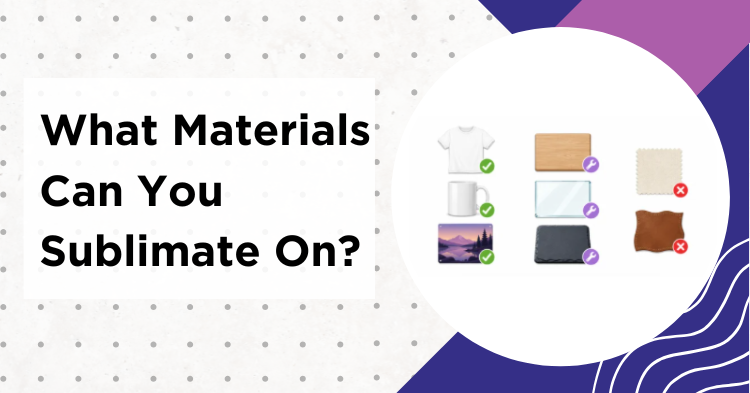
What materials can you sublimate on mostly comes down to one thing: for normal craft sublimation, reliable results come from polyester or from surfaces with a dye-receptive polymer coating. Bare, heat-tolerant rigid materials can sometimes be made receptive with a compatible coating, while other materials are unsuitable because they cannot retain the dye reliably or safely withstand the process. A few synthetics like some nylons accept dye only under product-specific conditions, not as beginner-safe blanks. This guide sorts the common craft materials into three clear groups, works as-is, needs a coating, and does not work by conventional sublimation, so you know before you buy whether a blank is worth your time.
My Quick Answer
You can sublimate on white or light high-polyester fabric and on any hard blank sold as sublimation-ready, such as coated mugs, tumblers, metal, ceramic, glass, and acrylic. Bare rigid materials like raw wood, plain glass, and uncoated metal need a compatible coating first. And materials such as untreated 100% cotton and genuine leather do not provide a reliable direct-sublimation surface, though there are workarounds; genuine leather can also discolor, dry out, or deform under pressing heat. When in doubt, look for the words “sublimation-ready” or “100% polyester.”
Last Updated: July 2026
What Materials Can You Sublimate On? The Quick Chart
Here is every common craft material sorted into three groups. The key thing to notice: a blank sold as sublimation-ready already has its coating, so it belongs in the first column, not the second. Use this as your buying reference, then click through to the full guide for any blank you want to try.
| Works as-is | Needs a compatible coating | Not by conventional sublimation |
|---|---|---|
| White/light 100% polyester fabric High-polyester blends (weaker color) Polyester canvas, felt, microfiber (heat-tolerant) Sublimation-ready mugs, tumblers, ceramic, glass, aluminum, acrylic, hardboard, slate, stone, polyester-faced neoprene, faux-leather and foam-board blanks |
Bare ceramic and tiles Uncoated metal Plain glass Raw wood, MDF, hardboard Untreated slate or stone Other bare, rigid, heat-tolerant substrates only when the coating maker specifically approves that material |
Untreated 100% cotton (workarounds only) Dark substrates without a white layer Genuine leather Ordinary craft foam board Unverified acrylic PVC/vinyl, polypropylene Unverified heat-sensitive fabrics/plastics |
My tip: the two magic words when shopping are “polyester” for fabric and “sublimation-ready” for hard goods. If a listing says neither, treat it as unverified and test one piece before buying a batch.
Fabrics You Can Sublimate On
Fabric is the easiest place to start, as long as it is polyester. The exact ratio matters more than most beginners expect, so see what percent polyester for sublimation for the numbers behind each blend. A white or light 100% polyester shirt gives the brightest, most wash-resistant result because the polyester fibers themselves receive and hold the dye. Blends can also be sublimated, but only the polyester fibers retain the color, so a 50/50 or 65/35 blend comes out lighter, softer, and more vintage-looking. Higher polyester percentages usually produce stronger, more durable color; 65% polyester or more is a common starting point for a reasonably visible print, not a universal cutoff.
Canvas made from high-polyester fabric can be sublimated without an added coating, since the polyester does the work, but cotton canvas and low-polyester canvas do not behave the same way. Polyester felt and polyester microfiber can also work when their fiber content, finish, surface texture, and heat tolerance are suitable for sublimation. Color matters as much as fiber: sublimation ink is transparent with no white, so it only shows properly on white or light fabric. That is also why dark shirts do not sublimate directly.
Hard Blanks That Already Work
Most hard sublimation blanks you buy are sold pre-coated, so they work straight out of the package with no extra prep. That includes sublimation mugs and cups, tumblers, coated metal panels, and hard coasters. The key detail is that a plain ceramic mug from the kitchen aisle will not work, only a mug with a manufacturer-applied sublimation coating will. Sublimation-ready acrylic, hardboard, slate, polyester-faced neoprene, and faux-leather blanks belong here too, as long as the manufacturer identifies them as made for dye sublimation. Phone case blanks work the same way, though the design usually goes onto a coated insert or a coated hard shell rather than a soft silicone bumper. Powder-coated drinkware is a special case: it can work, but only when the coating is tested for sublimation. For exact temperatures and times on any of these, our sublimation temperature chart is the quick reference.
What “Sublimation-Ready” Looks Like:
Three examples of the categories above, each sold with the coating already applied – the difference between these and their hardware-store lookalikes is the whole point of this guide.
- Coated ceramic mugs – the plain mug from the kitchen aisle will not take the ink; these carry a factory coating.
- Coated aluminium photo panels – bare metal is in the second column above and needs coating first; these are ready to press.
- Hard coasters with cork backing – sold as sublimation blanks, not as paintable craft tiles.
My tip: the word to look for in a listing is the use, not the material. “Ceramic tile for painting” and “ceramic sublimation blank” can look identical in the photo and behave completely differently under the press.
As an Amazon Associate I earn from qualifying purchases.
Two blanks are worth a note. Sublimation-ready faux (PU) leather can give bright results, but only when the manufacturer identifies it as sublimation-ready and light enough for good color; generic PU leather is not automatically suitable. And ordinary acrylic sheet should not be assumed sublimation-compatible, since it can soften, warp, or bubble, so use acrylic sold specifically for sublimation and follow its instructions, because the printable side, temperature, and heat tolerance vary by product.
Materials That Need a Coating First
Plenty of rigid materials can sublimate beautifully, but only once they carry a dye-receptive polymer coating. The easiest and most reliable route is to buy blanks already made for sublimation. Bare wood, plain glass, uncoated metal, raw MDF or hardboard, and untreated slate or stone all fall here: the raw versions will not hold the dye, but sublimation-ready coated versions work well. You can buy sublimation coating spray to treat some bare surfaces yourself, covered below, but for anything you sell, pre-coated blanks are far more consistent.
Can You Coat Your Own Blanks?
Sublimation coatings can make some otherwise unsuitable rigid surfaces receptive to sublimation dye, but only when the coating is compatible with the substrate and is applied and cured exactly as the manufacturer specifies. A coating cannot make a heat-sensitive, contaminated, structurally unsuitable, or otherwise incompatible object safe to press, and flexible materials require coatings specifically intended for that substrate and application. The honest trade-off is consistency: a hand-applied coat is easy to lay down unevenly, which shows up as blotchy color, and different materials need different products and cure steps.
Check the coating manufacturer’s requirements for surface preparation, ventilation, curing temperature, food-contact limitations, and intended substrate. Do not assume a sprayed coating is suitable for drink-contact areas, dishwasher use, or products intended for children. For a one-off craft, coating spray is a fun option worth trying. For anything you sell or want to repeat reliably, pre-coated sublimation blanks give a smoother, more predictable result with far less trial and error, so most sellers stick with them.
What Cannot Be Sublimated
Some materials do not sublimate with a normal dye and heat process. The big one is 100% cotton: it does not provide a dye-receptive polymer structure, so a conventional direct sublimation print on untreated cotton usually looks weak and has poor wash durability because the cotton fibers do not retain disperse sublimation dye effectively. Workarounds exist, but they change the process. You can sublimate onto a printable heat-transfer film or white transfer layer, or apply a polyester-based coating to the fabric. In those methods the dye enters the added film or coating rather than the cotton fibers themselves, so they are not conventional direct-to-cotton sublimation.
Dark and black substrates are a second case. Because ordinary sublimation printers lay down no white and the dyes are transparent, the blank’s dark color shows through, so most colors become heavily distorted, muted, or invisible. A very dark design may still be detectable on some medium-colored surfaces, but normal full-color artwork will not reproduce accurately without a white receptive layer. Beyond that, avoid genuine leather, raw and untreated wood, uncoated glass or metal, ordinary craft foam board, PVC and vinyl, polypropylene, and unverified heat-sensitive synthetics. Some nylon fabrics may accept sublimation dye under carefully controlled, lower-temperature conditions, but results vary and the fabric can scorch, shrink, or lose its finish, so test first and follow the maker’s instructions. Craft foam board in particular can warp, melt, or release fumes under a press, so use only foam board manufactured and labeled for sublimation.
Why Only Polyester and Coated Surfaces Work
The reason comes down to how sublimation behaves. Under heat, the disperse dye leaves the transfer paper and diffuses into the heated polyester or dye-receptive polymer coating. As the material cools, the dye remains retained within that polymer structure. Bare ceramic, metal, glass, wood, and stone generally lack a suitable dye-receptive layer, so the dye either transfers poorly or remains only as a weak, non-durable surface deposit that can fade, wash, or wipe away. That single fact explains the whole chart above. As a practical beginner rule, high-polyester materials and verified sublimation-ready surfaces work reliably, while anything else is product-specific, experimental, or unsuitable.
How to Tell if a Blank Will Sublimate
Before you buy, check three things. First, the material: is it high-polyester fabric, or a hard blank described as sublimation-ready? Second, the color: white or light surfaces show sublimation properly, dark ones do not. Third, the wording: listings that specifically say “sublimation-ready,” “for dye sublimation,” or “100% polyester” are stronger indicators, while a vague “ceramic mug” or “metal sign” with no coating mentioned is a gamble. “Poly-coated” alone does not guarantee the coating is formulated for sublimation.
When a listing is unclear, the safest move is to ask the seller or test a single piece before committing to a batch. If you are still building confidence, our beginner guide walks through the whole process, and the print sizes guide helps you size the design once you know the blank will work.
Frequently Asked Questions
What materials can you sublimate on?
You can sublimate on white or light high-polyester fabric and on any hard blank sold as sublimation-ready, including coated mugs, tumblers, metal, ceramic, glass, and acrylic. Bare rigid materials like raw wood or uncoated metal need a compatible coating first, and materials without polyester or a coating, like untreated cotton, need a workaround.
Can you sublimate on 100% cotton?
Not with conventional direct sublimation, because cotton does not retain disperse dye well, so the print looks weak and does not hold up in the wash. Workarounds like a printable white transfer layer, a sublimation transfer film, or a polyester coating spray add a receptive layer, so the dye enters that layer rather than the cotton itself.
Do you need a special coating to sublimate?
For hard surfaces, usually yes. Most rigid materials, including ceramic mugs, metal, glass, wood, hardboard, and slate, need a manufacturer-applied or compatible dye-receptive polymer surface. Acrylic is product-specific, so use only acrylic explicitly sold for sublimation and follow its instructions. High-polyester fabric is the exception, since the polyester itself holds the dye with no coating needed.
Can you sublimate on dark or black materials?
Not effectively. Sublimation ink is transparent and has no white, so on a dark surface the blank’s color shows through and most colors become distorted or invisible. Sublimation works best on white or light blanks. For dark shirts you need a workaround like white heat-transfer vinyl or a printable film.
How do I know if a blank is sublimation-ready?
Look for “sublimation-ready,” “for dye sublimation,” or “100% polyester” in the listing. If a hard blank does not mention a sublimation coating, treat it as unverified and test one piece before buying a batch, since an uncoated surface will not hold the dye. “Poly-coated” alone is not a guarantee.
Can you sublimate on cardstock?
Not in the same way sublimation works on polyester. Plain cardstock is cellulose-based and does not have the dye-receptive polymer coating used on sublimation blanks. Sublimation ink may still stain the paper fibers, but the result is typically softer and more muted than it would be on a properly coated surface and may be less resistant to rubbing or moisture.
Because cards and gift tags normally do not need to withstand laundering, the result may still be suitable for decorative paper crafts if you accept the less vivid and potentially less durable finish. For more predictable results, use a paper or cardstock product specifically rated by its manufacturer for sublimation, or print the design directly with a regular inkjet printer, which is usually the more suitable method for paper.


Emily Johnson is a DIY crafter and the founder of SublimationGuides.com. She started out repairing and sewing clothes for her two sons, then discovered sublimation as a way to personalize her makes. Today she researches and shares honest, tested guides on sublimation settings, troubleshooting, and equipment.