Updated: March 6, 2026
Sublimation on canvas opens up a whole world of custom wall art, tote bags, pillows, and more. The results can look absolutely stunning when you get the settings right, and the good news is that polyester canvas is relatively easy to work with, but it is more heat-sensitive than hard substrates like mugs or metal. Even small temperature changes can cause yellowing. Whether you want to make gallery-style photo prints or personalized bags for your craft business, this guide covers everything from fabric choice to heat press settings.
My Quick Answer
Sublimation on canvas works best on 100% polyester canvas at 385°F for 55 seconds with medium pressure. Polyester canvas needs zero coating and gives vibrant, long-lasting colors. If you only have cotton canvas, you will need a sublimation coating spray or laminate sheet first. Always pre-press your canvas for 5–10 seconds to remove moisture before applying your transfer.
Last Updated: February 2026
Quick Sublimation Canvas Settings (At a Glance)
- Polyester Canvas → 385°F (196°C) | 50–60 sec | Medium pressure
- Cotton Canvas (Coated) → 375–385°F | 45–55 sec
- Pre-Press → 5–10 sec (removes moisture)
- Peel → Warm (or wait 10–20 seconds if you notice any ghosting)
If you are wondering what temperature to use for sublimation on canvas, 385°F for about 55 seconds on 100% polyester canvas is the safest starting point.
Contents
- 1 Can You Sublimate on Canvas?
- 2 Polyester Canvas vs Cotton Canvas for Sublimation
- 3 How to Sublimate on Canvas (3 Methods)
- 4 Sublimation on Canvas Settings
- 5 Sublimation on Canvas Tote Bags and Products
- 6 Is Sublimation on Canvas Profitable?
- 7 Common Canvas Sublimation Problems
- 8 5 Beginner Mistakes with Sublimation on Canvas
- 9 FAQs
- 10 Best Canvas Blanks for Sublimation
- 11 My Take: Is Sublimation on Canvas Worth It?
Can You Sublimate on Canvas?
Yes, you absolutely can. But here is the thing most people get wrong: not all canvas is the same. Traditional canvas is made from cotton, and cotton fibers do not bond with sublimation ink on their own. The dye needs polyester or a polymer coating to grab onto, which is why polyester canvas gives you the best results straight out of the package.
If you have ever tried sublimating on a regular cotton canvas and ended up with washed-out, faded colors, that is exactly why. The ink had nothing to bond with. My tip: always check the fabric content before you buy your blanks. A label that says 100% polyester is what you want for vibrant, no-fuss sublimation on canvas.
The concept works the same way as sublimation on mugs or sublimation on glass. Heat turns the ink into a gas, and it bonds permanently with the polyester fibers. The difference with canvas is the texture, which gives your prints a beautiful, almost painterly quality that you just cannot get on smooth surfaces.
Polyester Canvas vs Cotton Canvas for Sublimation
This is the single most important decision you will make, and it affects everything from your prep work to your final print quality.
Polyester canvas is purpose-built for sublimation. The ink bonds directly with the synthetic fibers, which means zero prep, zero coating, and the most vibrant colors you can get. You will notice that photos look almost gallery-quality on polyester canvas because the dye becomes part of the fabric rather than sitting on top of it. The colors will not crack, peel, or wash away over time.
Cotton canvas is the classic artist canvas you find at craft stores. On its own, it will not accept sublimation ink properly. You need to add a polymer layer first, either through a coating spray or a laminate sheet. The results can still look good, but they will never quite match polyester for vibrancy and durability. The coating can also affect the texture and feel of the canvas.
| Feature | Polyester Canvas | Cotton Canvas (Coated) |
|---|---|---|
| Prep Required | None | Coating spray or laminate |
| Color Vibrancy | Excellent | Good (slightly muted) |
| Durability | Permanent, won’t fade | Good with proper coating |
| Cost | Moderate (blank cost) | Low blank + coating cost |
| Best For | Wall art, tote bags, pillows | Budget projects, experiments |
My recommendation? Always go with polyester canvas if you can. It saves time, gives better results, and you do not have to worry about coating wearing off over time. The price difference is minimal when you factor in the cost of coating spray.
How to Sublimate on Canvas (3 Methods)
There are three main ways to get sublimation designs onto canvas, and each one works for different situations. Here is how they compare.
Method 1: Direct Sublimation on Polyester Canvas
This is the easiest and best method, period. You print your design on sublimation paper, tape it face-down onto your polyester canvas blank, and press. The ink bonds directly with the polyester fibers, and you get vibrant, permanent colors with minimal effort.
The key is getting your canvas flat and wrinkle-free before pressing. Always pre-press your canvas for about 5–10 seconds to remove any moisture. This step alone prevents most problems people run into. Then tape your transfer down securely with heat-resistant tape on all four sides. Trust me on this one — any shifting during the press will cause ghosting, and canvas ghosting is very hard to fix.
After pressing, peel the paper while the canvas is still warm. You will see the colors are slightly darker on polyester canvas compared to hard substrates, which actually gives canvas prints that rich, artistic look.
For this method, you really only need a few supplies. Here is what should be on your table before your first press:
- Heat-resistant tape – prevents ghosting (tape all four sides)
- Butcher paper – protects canvas and reduces yellowing risk
- Pressing pillow – mandatory for tote bags and pillow covers
You will also need sublimation paper and a sublimation printer, of course. But those three items above are what make the difference between a clean press and a ruined blank.
Method 2: Coating Spray on Cotton Canvas
If you already have cotton canvas on hand, a sublimation coating spray can make it work. The spray deposits a thin polymer layer that gives the ink something to bond with. This method takes more effort but can produce decent results on a budget.
You will want to spray an even coat across the entire area where your design will go. Hold the can about 8–10 inches away and use smooth, overlapping passes. Uneven coating is the number one cause of blotchy prints with this method. Let the spray dry completely, or speed things up by pre-pressing for about 15 seconds at 300°F.
One thing to keep in mind: coated cotton canvas will never look quite as vibrant as polyester. The colors tend to be slightly more muted, and the coating can sometimes create a slightly glossy finish that changes the natural canvas texture.
Method 3: Laminate Sheet on Cotton Canvas
The laminate sheet method works differently. Instead of coating the canvas itself, you place a special sublimation laminate sheet between your transfer paper and the canvas. The laminate acts as a bonding agent, transferring the ink to the canvas surface during pressing.
Place the laminate sheet with the dull side touching the canvas and the glossy side facing up toward your sublimation paper. Press at 365–385°F for about 40–50 seconds. This method can give slightly sharper results than coating spray on cotton, but the print sits more on top of the canvas rather than becoming part of the fibers.
Which method wins? Direct sublimation on polyester canvas beats both other methods for color vibrancy, durability, and ease of use. If you are starting a business or want professional-looking results, polyester is the only way to go. The coating spray and laminate methods are fine for occasional projects or experimenting, but they add extra steps and the results are never quite as good.
Sublimation on Canvas Settings
Getting your heat press settings for canvas right is critical. The right canvas sublimation temperature depends on your canvas type. Too hot or too long and you risk yellowing. Too cool or too short and your colors will look faded. Here are the settings that work best.
| Canvas Type | Temperature | Time | Pressure |
|---|---|---|---|
| Polyester Canvas (Direct) | 385°F (196°C) | 50–60 seconds | Medium |
| Cotton Canvas (Coated) | 375–385°F (190–196°C) | 45–55 seconds | Medium |
| Canvas with Laminate | 365–385°F (185–196°C) | 40–50 seconds | Medium |
| Canvas Tote Bags | 385°F (196°C) | 50–60 seconds | Medium |
A few important notes about these settings. Your press might read slightly different from the actual temperature at the platen, so always do a test press on a scrap piece of canvas first. If you see yellowing, drop the temperature by 5–10 degrees. If the colors look pale or washed out, add 5–10 more seconds.
Medium pressure is important with canvas because the surface is not perfectly flat like acrylic or glass. You want enough pressure for good ink transfer without crushing the canvas texture. If you press too hard, you can flatten the weave and lose that characteristic canvas look.
For thicker canvas materials, you might need an extra 5–10 seconds compared to thinner canvas. And always pre-press for 5–10 seconds to drive out moisture. This is especially important with canvas because the fabric absorbs humidity from the air, and that trapped moisture causes all kinds of problems.
One more thing that makes a big difference with canvas: your image resolution. Always design at 300 DPI or higher. Canvas has a visible weave that can make lower-resolution images look soft and pixelated, especially on larger prints like wall art. For tote bags and smaller items, 200 DPI can work in a pinch, but 300 DPI is the safe bet. If you are printing photos on canvas, export them at the highest quality your software allows.
Sublimation on Canvas Tote Bags and Products
Canvas is not just for wall art. There is a huge range of products you can sublimate on, and some of them sell really well if you are running a business.
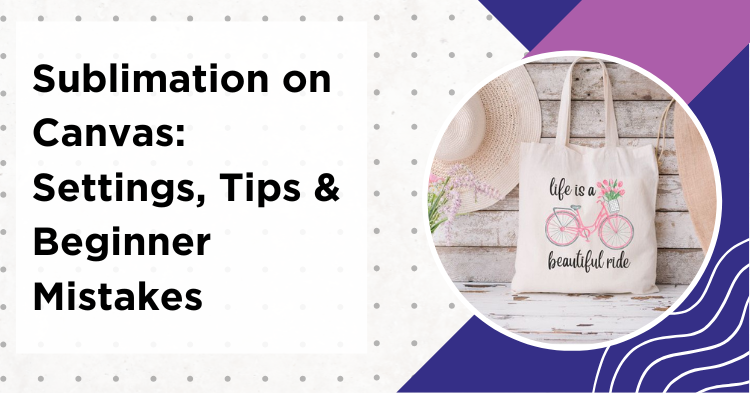
Canvas tote bags are probably the most popular canvas sublimation product right now. Polyester canvas totes are available as sublimation blanks, and they are perfect for custom gifts, promotional items, or selling at craft fairs. The key is using a pressing pillow inside the bag to create an even surface. Without one, the seams and handles will cause uneven pressure and leave marks in your design.
Canvas wall art and photo prints are where sublimation on canvas really shines. The canvas texture gives printed photos and artwork a premium, gallery-wrapped look that customers love. You can buy pre-stretched polyester canvas frames or sublimate on flat canvas sheets and stretch them yourself afterward.
Canvas pillow covers are another great option. Polyester canvas pillow blanks sublimate beautifully and are perfect for home decor or personalized gifts. Similar to tote bags, make sure to use a pressing pillow inside to keep the surface flat during pressing.
Canvas pouches and pencil cases are smaller projects that are great for beginners and sell well as personalized gifts. The same settings and techniques apply — just size your designs accordingly and tape everything securely.
For any canvas product with seams, zippers, or handles, always use a heat-resistant pressing pillow or pad underneath to even out the surface. Uneven pressure is the most common cause of patchy prints on canvas products.
Care and washing tips: Sublimated polyester canvas products hold up well, but you want to treat them right. For tote bags and pillow covers, wash them inside out on a cold or gentle cycle and hang dry. Avoid bleach and high heat in the dryer, because while the sublimation ink itself is permanent, excessive heat can affect the fabric over time. Canvas wall art just needs a gentle wipe with a damp cloth now and then. If you follow these basics, your prints will stay vibrant for years.
Is Sublimation on Canvas Profitable?
If you are thinking about selling sublimated canvas products, the margins are surprisingly good. Canvas tote bags are one of the most profitable sublimation products you can make, and the startup cost is low.
A polyester canvas tote blank typically costs $2–4 depending on the supplier and quantity. Add maybe $0.50 for ink and paper per print. You can sell custom tote bags for $18–25 at craft fairs, on Etsy, or through social media. That puts your profit margin somewhere around 60–75% per bag, which is excellent for a handmade product.
Canvas wall art is even better. A sublimation canvas sheet costs $2–5, a wooden frame maybe $3–5 if you build it yourself, and custom canvas prints sell for $30–60 depending on size. The perceived value of canvas art is very high because customers associate it with gallery-quality prints.
The real advantage of sublimation on canvas is the low material cost combined with high perceived value. Unlike mugs or tumblers, canvas products feel premium and artistic. If you already have a heat press and a converted sublimation printer, you can start selling canvas products with very little additional investment.
Common Canvas Sublimation Problems
Even with the right settings, canvas can throw you a few curveballs. Here are the problems you are most likely to run into and how to fix them.
Yellowing after pressing is the number one complaint with canvas sublimation. The first time I pressed polyester canvas, I used my regular mug settings — and the edges turned slightly yellow. That is when I realized canvas needs lower temperatures and shorter press times than hard substrates. Even 10 extra degrees can cause yellowing. Drop your temperature to 375–380°F and reduce your time by 5–10 seconds. Also make sure you are using butcher paper to protect the canvas from direct heat contact. Use butcher paper instead of Teflon whenever possible. Teflon sheets can trap moisture and increase the risk of yellowing on canvas.
Faded or washed-out colors usually mean one of three things: not enough time, not enough temperature, or moisture in the canvas. Always pre-press to remove moisture first. If colors are still fading, increase your time by 5–10 seconds before touching the temperature. If you are using cotton canvas, make sure your coating is applied evenly and has fully dried before pressing.
Ghosting and blurry edges happen when the transfer paper shifts during pressing. This is especially common on canvas because the textured surface does not grip the paper as tightly as smooth substrates. Always tape all four sides of your transfer paper, and be careful when closing your press not to bump or shift the paper. For more detailed ghosting fixes, check out my guide on how to remove sublimation ghosting.
Uneven color transfer shows up as patches or streaks in your design. This is almost always a pressure issue. Canvas is thicker and more uneven than other substrates, so you might need to increase your pressure slightly or use a pressing pad to distribute the force evenly. For tote bags and pillow covers, a pressing pillow inside the product makes a huge difference.
Blotchy results on coated cotton canvas come from uneven spray application. If you are using coating spray, apply multiple thin coats rather than one heavy coat. Let each layer dry before adding the next, and keep the can at a consistent distance while spraying. This is similar to the challenges with sublimation on leather, where surface preparation makes or breaks the final result.
5 Beginner Mistakes with Sublimation on Canvas
If you are just getting started with canvas sublimation, these are the mistakes that trip up almost everyone. Avoid these and your first prints will turn out much better.
1. Pressing too hot. This is the biggest one. Canvas yellows faster than mugs, metal, or glass. Always start at 385°F or lower and do a test press before committing to your final design. If you see any hint of yellow, drop the temperature by 5–10 degrees immediately.
2. Skipping the pre-press. Canvas absorbs moisture from the air, and that trapped moisture causes fading, blotchy spots, and sometimes even yellowing. A quick 5–10 second pre-press drives out the moisture and makes a huge difference in your final result.
3. Not using a pressing pillow for canvas tote bags. I ruined my first tote bag because I forgot the pressing pillow. The seams created uneven pressure and left faded areas near the edges. Always use a pressing pillow inside any product with seams or layers.
4. Using cotton canvas without coating. If you press a design onto plain cotton canvas, you will get extremely washed-out, barely visible results. Cotton needs a sublimation coating spray or laminate sheet first. When in doubt, always check the label for polyester content.
5. Not taping all four sides. Canvas has a textured surface that does not grip sublimation paper well. If you only tape one or two sides, the paper can shift during pressing and cause ghosting. Always tape every edge with heat-resistant tape.
FAQs
Can you sublimate on 100% cotton canvas?
Does sublimation on canvas fade?
What is the best canvas sublimation temperature?
Can you sublimate on canvas tote bags?
Do you need to coat canvas for sublimation?
Best Canvas Blanks for Sublimation
Choosing the right blanks is half the battle. You want 100% polyester canvas that is specifically designed for sublimation, and a few brands consistently deliver good results.
For tote bags, look for 12oz polyester canvas blanks with reinforced stitching. Brands like PYD Life and Locustsub are popular in the sublimation community because their bags have a smooth, even surface that presses well. The heavier 12oz weight gives the bag structure without warping under the heat press. Always make sure the bag has a flat printing area on both sides and check that handles and seams are sewn tightly so they do not shift during pressing.
For wall art, sublimation canvas sheets from brands like HTVRONT or A-SUB give you the most flexibility with sizing. You can sublimate on the flat sheet first and then stretch it onto a wooden frame for that gallery-wrapped look. Pre-stretched polyester canvas frames are more convenient but limit your size options and can be harder to press evenly because of the frame thickness.
For general canvas projects, always check the polyester content on the label. Some blanks marketed as “sublimation-ready” are actually polyester-cotton blends, and even 10–20% cotton content will noticeably reduce your color vibrancy. The closer to 100% polyester, the better your results will be. When in doubt, order a single sample before buying in bulk.
My Recommended Supplies for Canvas Sublimation:
- 100% Polyester Canvas Tote Bags (10-Pack) – 12oz heavy-duty sublimation blanks with zipper, 18.5" x 15". The best blank for custom gifts and craft business.
- Sublimation Canvas Sheets (12-Pack) – 11" x 13.7" double-sided canvas blanks for wall art and photo prints.
- Heat Press Pressing Pillow Set – Essential for tote bags and pillow covers. Evens out seams and prevents faded edges.
- Heat-Resistant Tape – Keeps your transfer paper in place. Tape all four sides to prevent ghosting on canvas.
- Butcher Paper Roll – Use instead of Teflon for canvas. Absorbs moisture and prevents yellowing.
- HTVRONT Sublimation Coating Spray (150ml) – For cotton canvas projects. Spray, dry, and press for results on non-polyester fabrics.
Need a sublimation printer? Check my Epson sublimation printer guide for the best beginner options.
As an Amazon Associate I earn from qualifying purchases.
My Take: Is Sublimation on Canvas Worth It?
After covering everything from settings to troubleshooting, here is my honest take on sublimation on canvas.
Best for: Tote bags, wall art, pillow covers, and custom gifts. Canvas gives you that premium, artistic look that customers are willing to pay more for.
Not ideal for: Outdoor signage or anything exposed to constant direct sunlight and rain. The UV exposure will fade colors over time, and canvas is not waterproof.
Beginner-friendly? Yes, if you stick with polyester canvas. It is beginner-friendly because it forgives minor pressure variations better than hard surfaces (but it does not forgive excess heat — watch for yellowing).
Business potential? High. With profit margins of 60–75% on tote bags and even higher on wall art, sublimation on canvas is one of the most profitable product categories you can get into. The startup cost is low and the perceived value is very high.
If you are looking for more info on polyester canvas sublimation settings for blended fabrics, my guide on sublimation heat press settings for 60/40 blends covers how polyester content affects your results.

Emily loves making things special.
She’s also a mom and a wife who enjoys crafting and runs a small business from her home. She knows that the little things can make a house feel like a warm and loving home. This belief has led her to explore the exciting world of sublimation, a crafty way to add a personal touch to just about anything. Her website shares valuable information about sublimation, her crafty ideas, and tips.